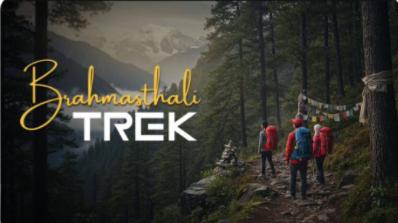
The Hidden Crest of Nainital: A Hiker’s Guide to Brahmasthali
Imagine a summit where the only soundtrack is the whisper of ancient oaks and the sharp call of a Monal pheasant. While the masses congregate at the popular overlooks of Nainital, a quiet sentinel stands just a few kilometers away. Brahmasthali, the highest elevation in the district, remains a sanctuary for those who value serenity over social media snapshots.
Whether you are an experienced trekker in need of a quick Himalayan escape or a traveler seeking "high-vibration" landscapes, this tucked-away ridge offers a spiritual stillness that more famous trails lost long ago.
The Legend of the High Sanctuary
Perched at an elevation of 2,636 meters, Brahmasthali hosts a rare spiritual landmark: a shrine dedicated to Lord Brahma. Referred to by locals as Badhan Devsthali, the peak is revered as a powerhouse of natural energy. It is a location where the boundary between the mundane and the divine feels remarkably thin, yet it remains refreshingly absent from mainstream tourist itineraries.
Why Brahmasthali Deserves a Spot on Your Map
The Ultimate Vantage Point: Standing taller than Naina Peak (China Peak) or Tiffin Top, this spot grants you an unobstructed 360-degree panorama.
True Solitude: Unlike the crowded paths of Kasol or Rishikesh, you will frequently find yourself the sole wanderer in these woods.
An Island in the Sky: During the early hours, the valleys below often vanish under a thick blanket of mist, creating the illusion that you are standing on a peak rising out of a white sea.
Trail Logistics at a Glance
FeatureDetailsPeak Elevation 2,636 meters (Approx. 8,650 feet)
TrailheadVia Kunjkharak Road (near Pangot/Vinayak)
Total Distance 2.5 km to 5 km (Round trip)Time Required4 to 6 hours
Difficulty Level Moderate (Short duration but consistently steep)
Export to Sheets
The Ascent: Through the Oak Shadows
The trek originates near the avian haven of Pangot. The moment you leave the Kunjkharak Road, a dense canopy of rhododendron, pine, and oak envelops the path. The air turns crisp and thin, carrying the heavy scent of damp earth and resin.
The climb is a steady, heart-pumping uphill journey. If your visit falls in March or April, you’ll witness a seasonal miracle: the rhododendrons erupt in bloom, carpeting the forest floor in deep crimson.
The Summit Revelation
Upon reaching the temple at the crest, the forest suddenly opens up. To the North, the Great Himalayan Range unveils its full majesty. Giants like Nanda Devi and Trishul stand like frozen white guardians against a sapphire sky. Looking South, the verdant, rolling hills of the Kumaon region stretch toward a hazy, infinite horizon.
Pro-Tips for the Trail
Optimal Timing: Plan your trip between October and February for crystal-clear mountain views, or in April to catch the floral bloom.
Pack Essentials: There are no vendors on this mountain. Ensure you carry at least 2 liters of water and high-energy snacks like nuts or fruit.
Respect the Sacred: This is an active place of worship. Kindly remove your footwear before stepping into the temple courtyard and maintain a quiet atmosphere.
Wildlife Awareness: This region is a corridor for leopards and barking deer. It is best to trek in small groups and ensure you finish your descent before the sun dips below the horizon.
Final Thoughts
Brahmasthali is more than just a viewpoint; it is a glimpse into what the Himalayas felt like before the era of over-tourism. It is a space to breathe deeply, admire the giants of the North, and reclaim a moment of peace.
If you are heading to the Kumaon region, don't limit yourself to the lakesides. Aim higher.